
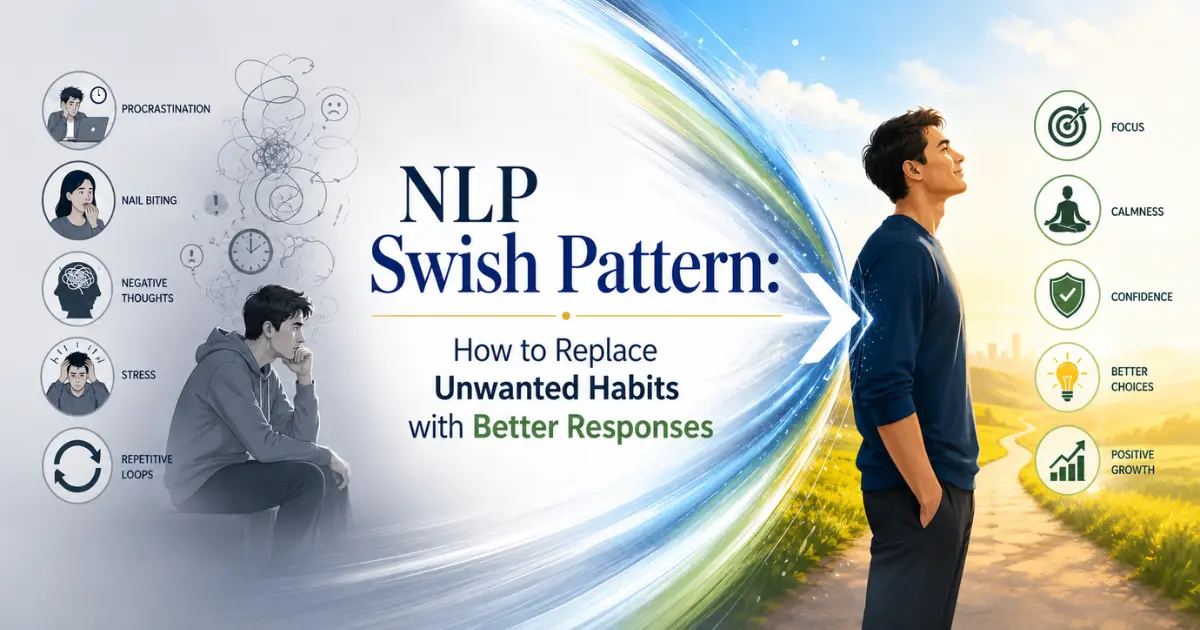
Changing a habit is not always easy. Many people know what they want to change, but when the same situation appears, the old response comes back automatically. It may be procrastination, self-doubt, anger, fear, overeating, nail biting, or negative thinking.
This happens because the mind often follows familiar patterns. A trigger appears; the mind connects it to an old response, and the behaviour repeats.
The NLP Swish Pattern is a practical technique in Neuro-Linguistic Programming for changing this automatic response. It helps the mind move away from an unwanted habit or thought and move toward a better response.
Instead of directly fighting the old behaviour, the Swish Pattern works with how the mind stores images, feelings, and internal experiences. By changing the internal picture connected to the habit, a person can create a new direction for their thoughts and behaviour.
What is NLP Swish Pattern?
The NLP Swish Pattern is a mental technique used to replace an unwanted habit, thought, or emotional response with a better one. In simple words, it helps the mind move from an old pattern to a new response.
For example, it can help a person reduce nervousness before public speaking, stop procrastinating before a difficult task, or manage negative self-talk before an important meeting.
In most cases, there is a trigger, such as an image, situation, sound, memory, or feeling, that starts the old response. The Swish Pattern helps identify this trigger and connect it with a better self-image, so the mind can learn a more useful way to respond.
The main purpose of the NLP Swish Pattern is to help a person move from:
- Old habit to better behaviour
- Negative thinking to useful thinking
- Fear to confidence
- Avoidance to action
- Emotional reaction to calm response
- Self-doubt to self-belief
- Repeated pattern to conscious choice
How the NLP Swish Pattern Works
The NLP Swish Pattern technique works by changing the internal image linked to a habit or response. Every repeated behaviour usually starts with a trigger, such as something a person sees, hears, imagines, or feels.
For example, a difficult task may trigger procrastination, a close view of the nail may trigger nail biting, or imagining a negative outcome may trigger nervousness.
Once the trigger is identified, the person creates a clear image of the desired response. The old image is mentally weakened, while the new image becomes larger, clearer, and stronger. With repetition, the mind begins to associate the old trigger with the new response.
This quick mental shift is repeated several times. With repetition, the mind starts to connect the old trigger with the new desired response.
The process usually works through these steps:
- Identify the unwanted habit or reaction.
- Find the exact trigger that starts the old response.
- Notice the image, sound, or feeling connected to the trigger.
- Create a positive image of the desired behaviour.
- Make the old image small, dull, or distant.
- Make the new image bigger, brighter, and more attractive.
- Repeat the shift until the new response feels more natural.
The goal is not just to remove the old pattern. The goal is to give the mind a better direction.
How to Practice NLP Swish Pattern Step by Step
The Swish Pattern should be practised with one specific habit or response at a time. Trying to change too many things together can make the process unclear.
Start with a simple and specific behaviour. For example, instead of saying “I want to stop being lazy,” choose a specific situation, such as “I want to stop delaying my work when I open my laptop in the morning.”
The more specific the situation, the easier it becomes to identify the trigger and create a useful new response.
1. Choose the Habit You Want to Change: First, choose one habit, thought, or emotional response that you want to change. It should be something that happens repeatedly in similar situations.
For example:
- Delaying work
- Feeling nervous before speaking
- Checking the phone too often
- Reacting with anger
- Eating when stressed
- Negative self-talk
- Avoiding important tasks
2. Identify the Trigger: Next, think about what happens just before the old response starts. This is called the trigger.
- What do I see?
- What do I hear?
- What do I feel?
- Where am I?
- Who is with me?
- What thought comes first?
- What picture comes to my mind?
The trigger is important because it is the starting point of the old habit or reaction.
3. Create the Old Trigger Image: Now bring that trigger image into your mind. Try to see it clearly. It may be an image of a task, a person, a phone screen, a food item, a place, or a situation. This image should be connected to the moment before the unwanted habit starts.
4. Create the Desired Self-Image: Now create a picture of yourself responding better. This should not be unrealistic or forced. It should show a version of you that is calm, confident, focused, disciplined, or in control.
For example, you may see yourself starting your work calmly, speaking with confidence, ignoring the phone, or responding patiently in a difficult conversation.
5. Make the Desired Image Stronger: Make the new image more attractive in your mind. You can make it brighter, bigger, clearer, and closer. The image should feel positive and motivating. If the image does not feel meaningful, adjust it until it feels right.
6. Perform the Swish: Now bring back the old trigger image. Place the new desired image as a small picture within it.
Then quickly push the old image away and bring the new image forward. The old image becomes small and weak, while the new image becomes big and clear.
7. Break the State and Repeat: After each round, clear your mind for a few seconds. Look around, breathe normally, or think about something neutral.
With practice, the mind begins to form a new connection. When the old trigger reappears, the desired response may come more easily.
When to Use the NLP Swish Pattern Technique
The NLP Swish Pattern is useful when a person wants to change an automatic response. It works best when the behaviour has a clear trigger and happens repeatedly.
This technique can be used in many personal and professional situations.
1. For Unwanted Habits: The Swish Pattern can be used for habits that feel automatic. These may include nail-biting, excessive phone use, overeating, delaying work, or other repetitive behaviours.
2. For Negative Thought Patterns: It can help when a person keeps repeating the same negative thought. For example, “I cannot do this,” “I will fail,” or “I am not confident enough.”
3. For Self-Doubt: Many people experience self-doubt before interviews, meetings, exams, or public speaking. The Swish Pattern can help replace the self-doubt image with a confident self-image.
4. For Procrastination: When a person repeatedly avoids tasks, the Swish Pattern can help shift the mind from avoidance to action.
5. For Emotional Reactions: It can be useful when someone reacts quickly with anger, fear, irritation, or nervousness in a specific situation.
6. For Confidence Building: The technique can help create a strong internal image of confidence. This can be useful before presentations, client meetings, difficult conversations, or leadership situations.
7. For Personal Growth: The Swish Pattern supports personal growth by helping a person develop a better response rather than staying stuck in the same old behaviour.
However, this technique is not a replacement for medical care, counselling, or therapy. If someone is dealing with trauma, depression, severe anxiety, panic attacks, or suicidal thoughts, they should seek help from a qualified mental health professional.
Benefits of NLP Swish Pattern
The NLP Swish Pattern technique offers many practical benefits for people who want to change habits, thoughts, or emotional responses.
1. Helps Break Automatic Patterns: Many habits continue because the mind repeats the same pattern again and again. The Swish Pattern helps interrupt that old route and create a new one.
2. Supports Behaviour Change: This technique supports NLP for behaviour change by helping a person shift from an unwanted response to a better action.
3. Builds a Better Self-Image: The Swish Pattern focuses on who the person wants to become. This helps build a stronger internal image of confidence, calmness, discipline, or control.
4. Reduces the Power of Old Triggers: When the old trigger becomes weaker in the mind, it may lose some of its emotional pull. This makes it easier to choose a different response.
5. Helps with Negative Thinking: The technique can help replace negative thought patterns with more useful mental responses. This can support better focus and emotional balance.
6. Improves Confidence and Focus: By creating a clear picture of the desired response, the person may feel more prepared and focused in serious situations.
7. Can Be Practised in Daily Life: The Swish Pattern can be used for everyday situations such as work pressure, study habits, communication, public speaking, or personal discipline.
The NLP Swish Pattern is a simple and useful technique for changing unwanted habits, negative thoughts, and automatic emotional reactions. It works by helping the mind move from an old trigger to a better response.
Instead of only trying to stop a habit, the Swish Pattern gives the mind a new direction. It helps a person see themselves responding with confidence, calmness, focus, or control.
When practised correctly, it can support personal growth, behaviour change, emotional balance, and confidence building.
The key is to identify the right trigger, create a strong desired image, repeat the process, and allow the mind to learn a better pattern.
FAQs
The NLP Swish Pattern is a Neuro-Linguistic Programming technique used to replace unwanted habits, negative thoughts, or automatic reactions with more effective responses.
It works by identifying the trigger associated with an old habit and replacing it with a vivid image of the desired response. This helps the mind create a new pattern.
The purpose is to help a person move away from an unwanted behaviour or thought and move toward a more useful response.
Yes, it can help with habits when there is a clear trigger and repeated response. It is often used to address habits such as procrastination, nail-biting, overeating, and negative thinking.
Yes, it can help shift negative thought patterns by replacing the old internal image with a more positive and useful self-image.