
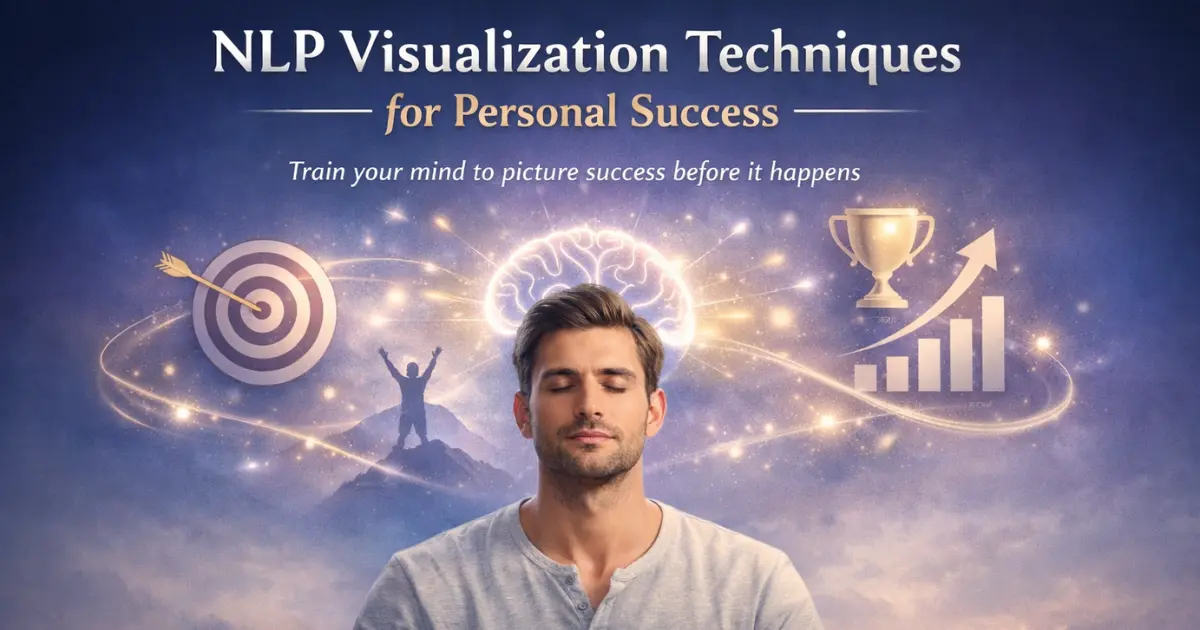
Neuro-Linguistic Programming focuses on how thoughts, language, and behavior influence one another. One technique often used in NLP training is visualization. Visualization involves creating clear mental pictures of desired outcomes and experiences. When practiced consistently, it helps the mind prepare for future situations and align actions with goals. Many coaches and trainers recommend visualization techniques to help individuals mentally rehearse positive outcomes and stay focused on what they want to achieve. In the context of NLP, visualization becomes a structured method that supports personal development and goal-focused thinking.
The Role of Visualization in Neuro-Linguistic Programming
1.How the Brain Responds to Mental Images
The human brain responds strongly to mental imagery. When a person vividly imagines a situation, the brain can react in ways similar to actual experiences. This response explains why athletes, performers, and professionals often use mental rehearsal before important events. Through repeated practice, the brain becomes familiar with the imagined scenario, making real-life situations feel more manageable and less stressful.
2. Connection Between NLP Principles and Visualization
Several principles within NLP support the use of visualization. One well-known idea in NLP is that people respond to their internal representation of reality rather than to reality itself. In other words, the way we mentally picture a situation influences how we react to it. By changing these internal pictures, individuals can shift their responses, attitudes, and behavior. This is why NLP visualization techniques are often used to reshape limiting beliefs and replace them with constructive mental patterns.
3. Benefits of Visualization for Personal Development
Visualization can support many aspects of personal development. It can help individuals clarify their goals, mentally prepare for challenges, and maintain focus on desired outcomes. Many people use visualization techniques for personal growth when working toward career goals, improving performance, or building confidence in new situations. When individuals repeatedly imagine positive outcomes, the mind gradually becomes more oriented toward them.
4. How Visualization Influences Thinking Patterns
Thinking patterns often develop from repeated thoughts and internal images. Visualization can influence these patterns by introducing new mental pictures that focus on progress and achievement. Instead of repeatedly imagining failure or difficulty, individuals can train their minds to focus on constructive outcomes. Over time, these repeated images can shape expectations and guide behavior in a more positive direction.
Practical NLP Visualization Techniques for Personal Success
1.Setting Clear Goals Before Visualization
Clear goals provide direction for visualization. Without a defined outcome, mental imagery may lack focus. Before beginning visualization exercises, individuals should identify what they want to achieve and describe the outcome clearly in their mind.
2. Using the SMART Goal Framework
SMART goal framework is often used to make goals more structured. SMART stands for Specific, Measurable, Achievable, Relevant, and Time-bound. When these elements are included, visualization becomes more precise because the mind has a clear target to focus on.
3. Mental Rehearsal Technique
Mental rehearsal involves imagining a future situation in detail and mentally practicing the desired behavior. For example, a person preparing for a presentation may visualize standing confidently, speaking clearly, and successfully completing it. This technique is commonly used in professional training and performance preparation.
4. The Swish Pattern Technique
The Swish Pattern is a well-known NLP technique for replacing unwanted mental images with positive ones. The process involves identifying a negative picture associated with fear or doubt and quickly replacing it with a new image that represents confidence or success. Repeating this process helps change internal responses over time.
5. Using the VAKOG Sensory Model
In NLP, visualization becomes stronger when it includes multiple senses. The VAKOG model represents visual, auditory, kinesthetic, olfactory, and gustatory senses. By including sights, sounds, physical sensations, smells, and tastes in mental imagery, visualization becomes more detailed and immersive. These methods are often included in visualization techniques used in coaching and personal development.
6. First-Person Visualization
First-person visualization means imagining a situation through your own eyes. You see the environment as if you are actually present in the scene. This perspective often creates stronger emotional engagement and helps individuals mentally experience the situation more vividly.
7. Third-Person Visualization
Third-person visualization involves imagining yourself from an outside perspective, as if you were watching a scene in a movie. This viewpoint can help individuals observe their actions and behavior from a distance, offering a different perspective on challenges or goals.
8. Creating Detailed Mental Images
Clear and detailed images make visualization more effective. Adding elements such as movement, environment, sound, and emotion helps create a stronger mental experience. Over time, practicing detailed imagery can make the visualization process more natural and easier.
9. Using Relaxation Before Visualization
A relaxed mind is better able to focus on mental imagery. Many NLP practitioners begin visualization sessions with simple breathing or relaxation exercises. This helps reduce distractions and allows the mind to concentrate on the mental images being created.
10.Regular Visualization Practice
Setting aside a few minutes each day for visualization can help strengthen focus and mental clarity. Over time, regular practice supports the development of NLP visualization for personal growth, allowing individuals to apply these techniques more effectively in daily life.
Visualization plays a meaningful role in Neuro-Linguistic Programming because it connects mental imagery with behavior and action. When individuals create clear mental pictures of their goals, the mind becomes more focused on the steps needed to achieve them. Through consistent practice and structured techniques, visualization can support confidence, preparation, and personal development. By applying these methods regularly, individuals can gradually train their minds to focus on progress and positive outcomes.